
Voices of Resilience: Northern Pakistan’s GLOF Survivors
Discover powerful stories from Talidas Valley capturing loss, hope, and resilience amidst the 2025 Glacial Lake Outburst Flood, raising awareness about climate change and community strength.
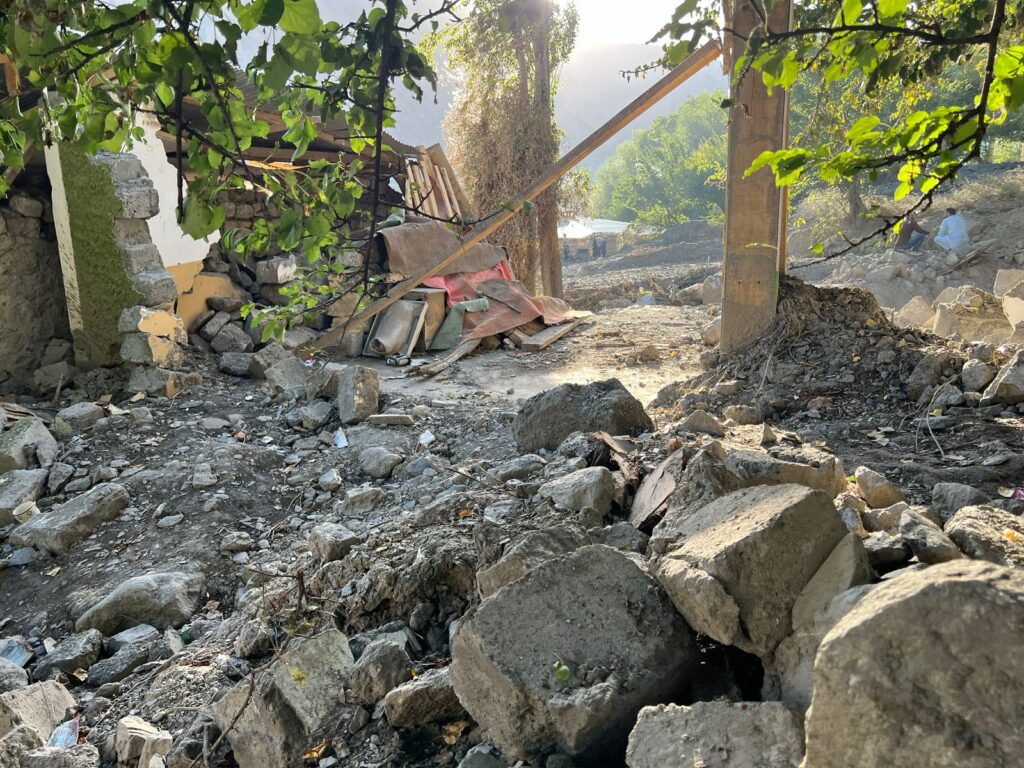
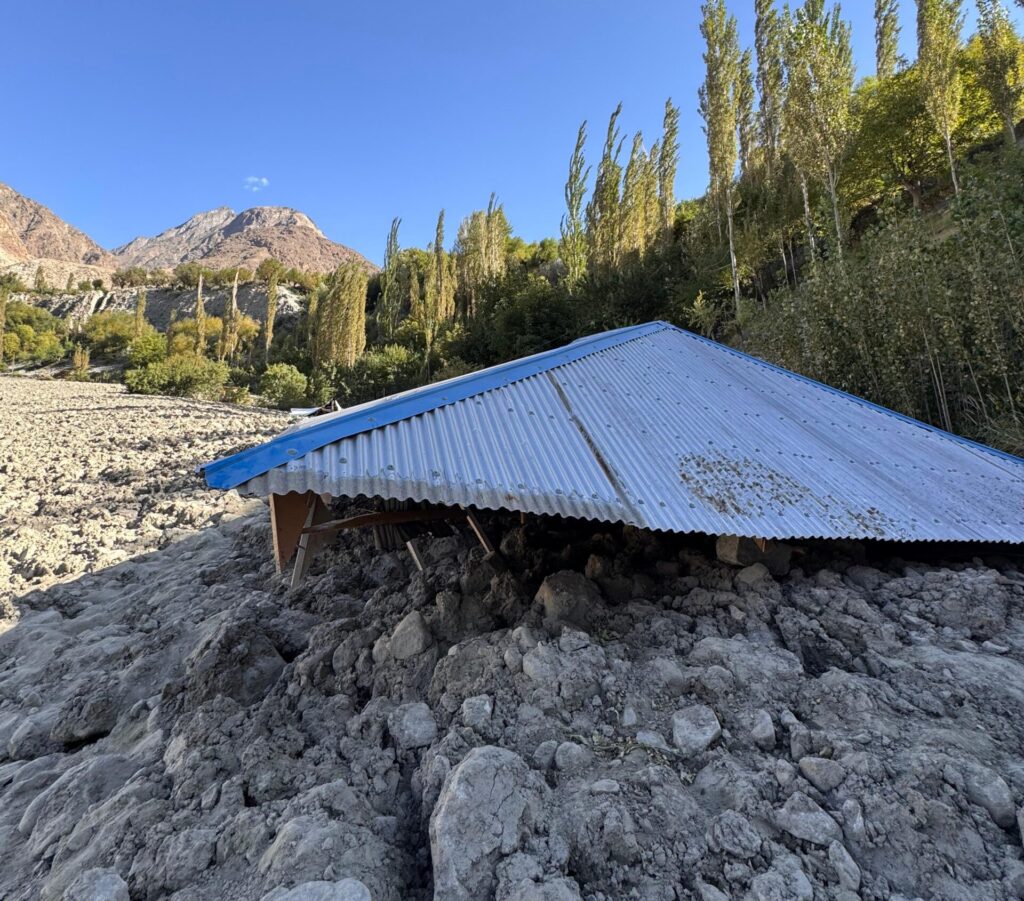
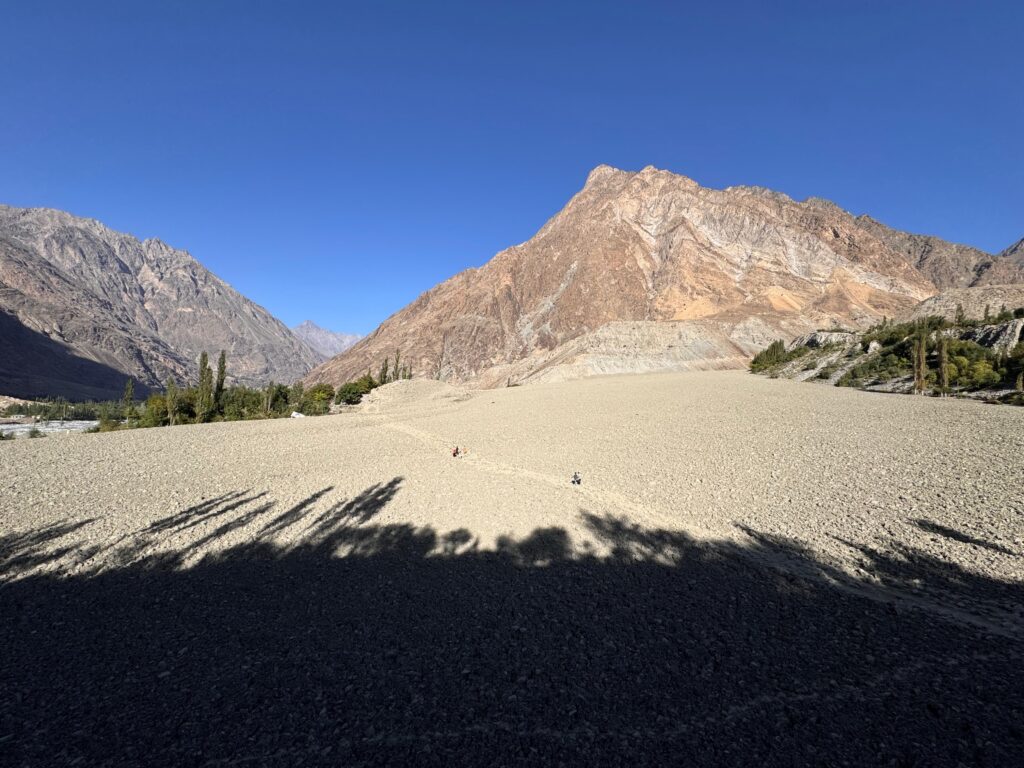
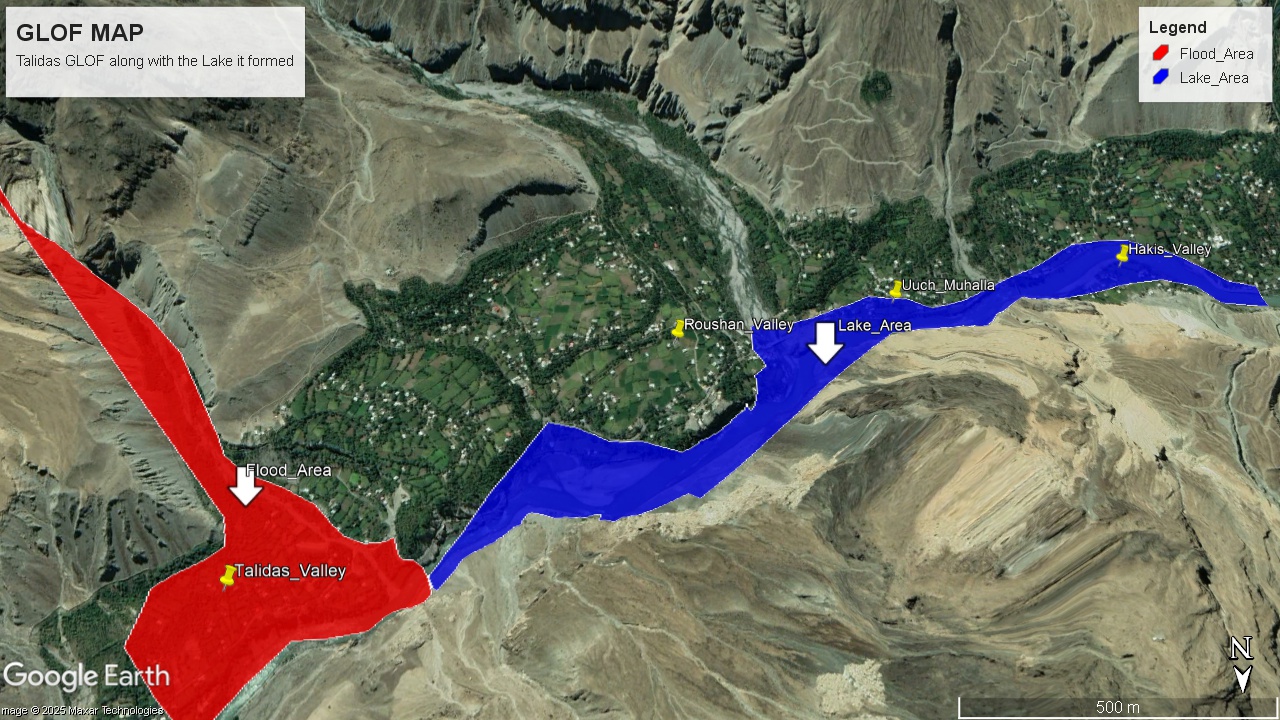
On 22 August 2025, a sudden glacial lake outburst flood (GLOF) struck Talidas Valley in Gupis-Ghizer District, Gilgit-Baltistan, destroying more than 60 homes and displacing over 3,000 residents. The floodwaters, triggered by the collapse of a glacial dam, blocked the Gilgit River for nearly six hours, submerging parts of Roushan and Hakis Valleys and cutting off entire communities. Local reports credit a shepherd’s midnight warning for saving around 200 people, as families fled barefoot through the dark to nearby hills.
This website documents that event through photographs, maps, and survivor stories, capturing how an isolated mountain community faced devastation, survival, and recovery. It aims to raise awareness about the increasing threat of glacial floods driven by climate change, which has already caused a 1.3 °C rise in regional temperatures and created more than 3,000 potentially dangerous glacial lakes across northern Pakistan.
Through this visual narrative, GLOF: Talidas seeks to educate, inform, and inspire action—highlighting both the human courage and the environmental urgency behind one of Pakistan’s most vulnerable landscapes. It is dedicated to students, researchers, policymakers, and global citizens who wish to understand the human face of climate change: stories of loss, resilience, and the will to rebuild.
Voices of Resilience from Talidas Survivors
Discover how Talidas communities share their stories, preserving memories and inspiring action through digital storytelling.
How Talidas Valley Endured the 2025 Flood
This narrative details survivors’ experiences during the 2025 GLOF event, highlighting resilience and lessons learned for climate adaptation.
Documentary: The 2025 Talidas Glacial Lake Outburst Flood
This short documentary captures the 2025 Talidas Glacial Lake Outburst Flood, combining real footage, survivor accounts, and field visuals to reveal the human and environmental impact of one of Gilgit-Baltistan’s most devastating climate events.
Source: Personally captured videos, except for drone footage and the initial flood clip, which are courtesy of a local resident, Talidas Valley (2025).
Witness of the Night
This interview features a resident of Talidas who witnessed the 2025 glacial lake outburst flood. She recalls waking to the roar of water and fleeing with his family, leaving everything behind. Though they lost their home and livelihood, she remains grateful that no lives were lost. Her story reflects the pain and resilience of Talidas.
Before the Flood:The Green Heart of Talidas
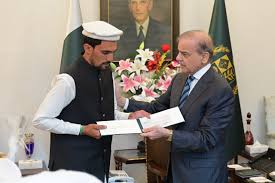
The Shepherd Who Sounded the Alarm
This photograph shows the shepherd from Talidas being honoured by the Prime Minister of Pakistan for his bravery during the 2025 glacial lake outburst flood. On the night of the disaster, he was tending his animals on higher slopes when he heard the roar of rushing water and felt the ground tremble. Realizing the danger, he climbed to a point with mobile signals and warned his family, allowing villagers to escape in time. Though he lost most of his animals, his quick response saved many lives. His recognition highlights how local awareness and courage can protect entire communities.
Source of Image: Sharif, S. (2019, September 7). Prime Minister Muhammad Shehbaz Sharif presents prize cheques to shepherds from Gilgit-Baltistan [Photograph]. Facebook. https://www.facebook.com/ShehbazSharif/posts/1379857840176456/
When the Flood Reached the Valley
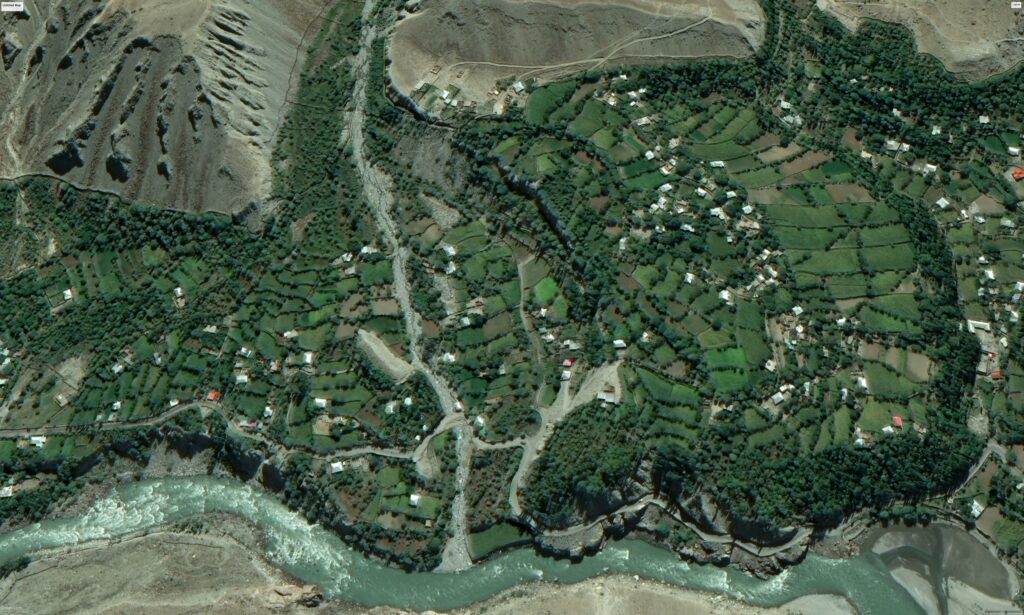
Trapped In a Flood
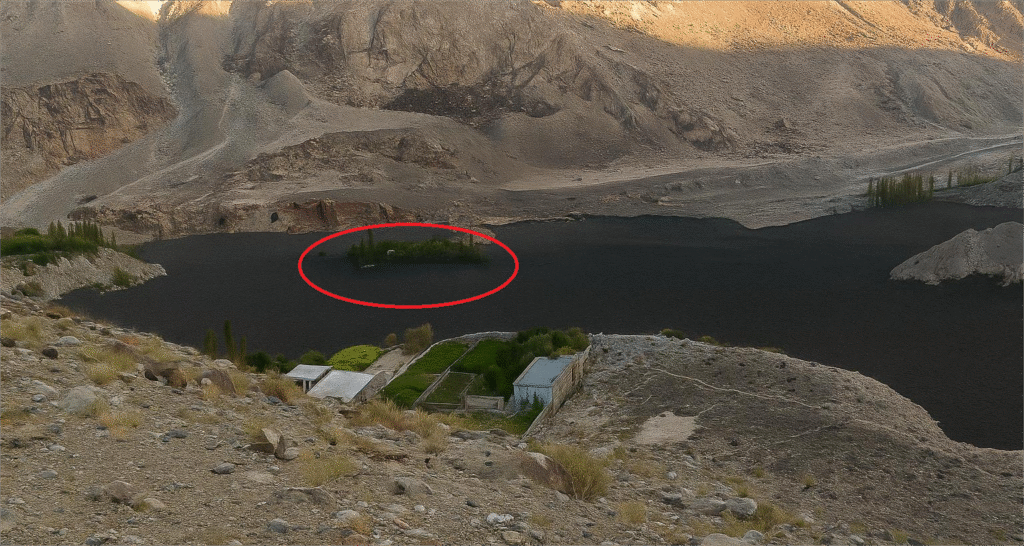
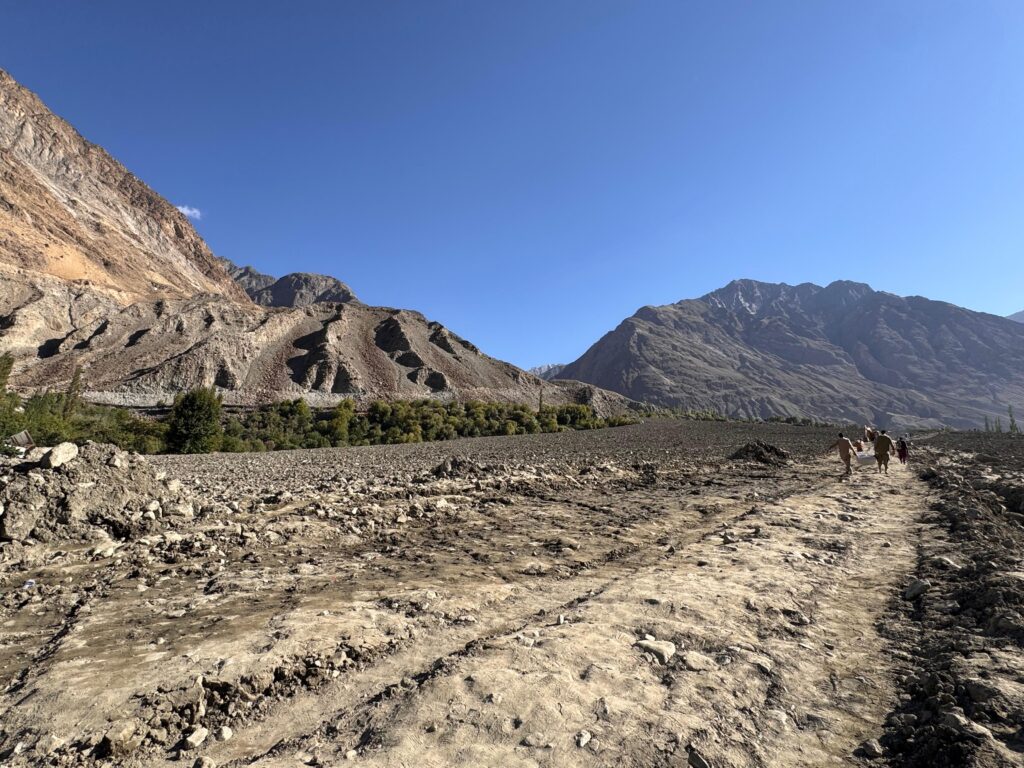
This photograph shows an elevated patch of land where about forty residents of Talidas were stranded after the first flood wave. Water and debris surrounded them, cutting off escape routes and communication. Families on the opposite bank watched helplessly as rescue help failed to arrive. A second flood surge struck, but the group miraculously survived. Realizing that waiting meant death, they decided to cross the unstable debris toward higher ground. Exhausted yet determined, they persevered with the help of guidance and prayers from others. Their story stands as a poignant reminder that in moments of crisis, human courage and unity can mean the difference between life and death.
Note: The red circle shows the region where the people were stuck.
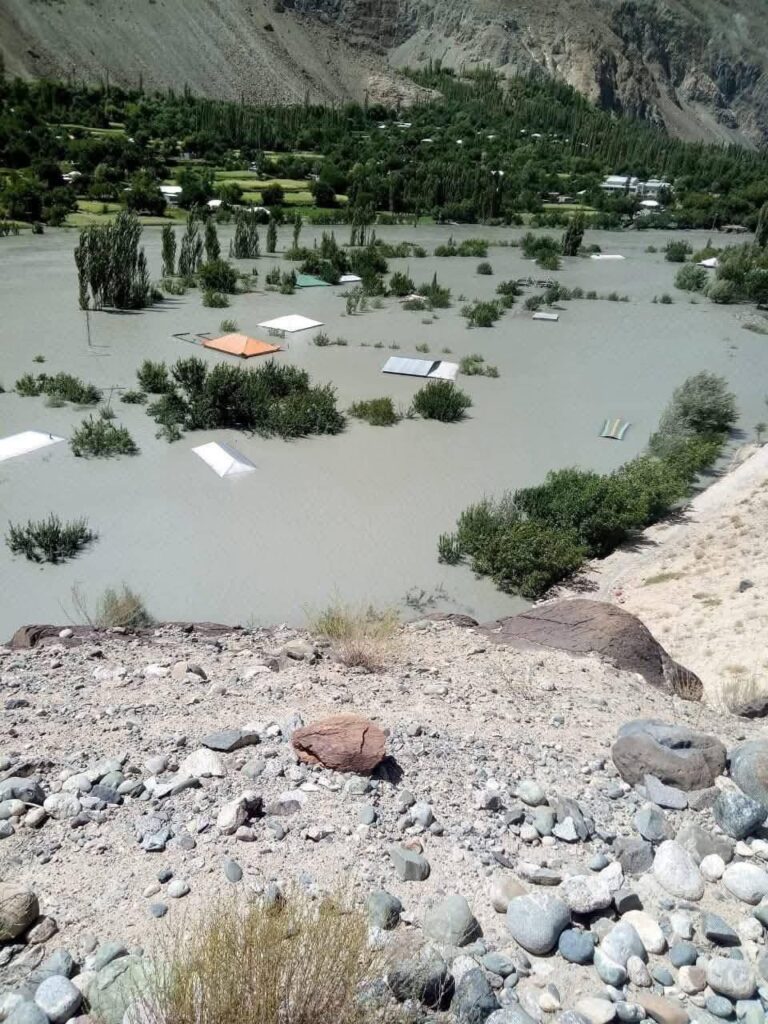
Homes Beneath the Water
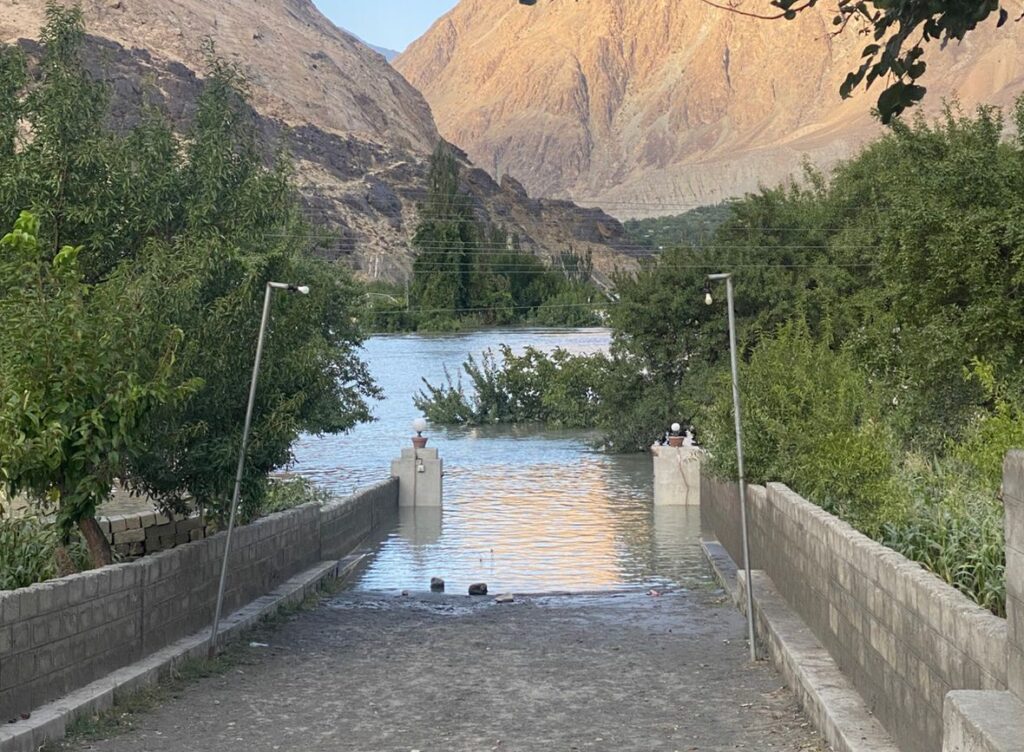
This photograph shows houses in Roushan Valley submerged after debris from the Talidas flood blocked the Gilgit River. Within hours, rising water engulfed homes, leaving only rooftops visible. Families watched helplessly from nearby slopes as years of work disappeared beneath muddy water. Each home carried memories and security that could not be replaced. The silence was filled with grief as people realized everything familiar was gone. This moment captures not only physical destruction but deep emotional loss, reminding us how quickly life can change in fragile mountain regions where survival depends on the delicate balance of nature.
The First Days of Recovery
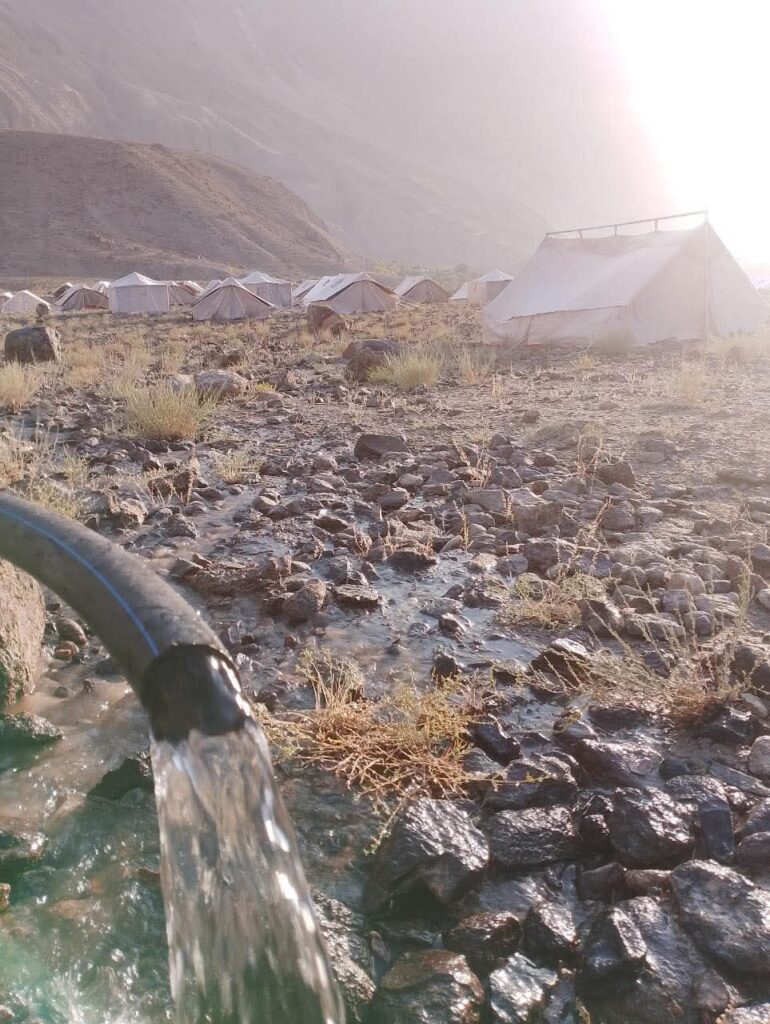
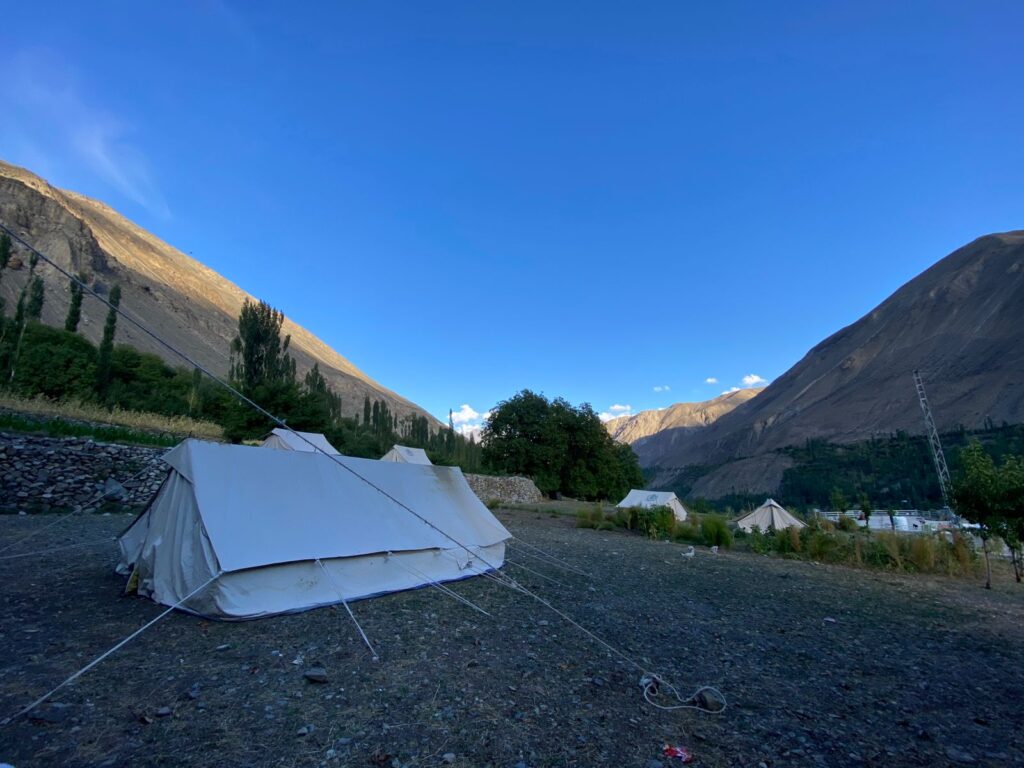
This photograph marks the beginning of recovery after the Talidas flood. When the water receded, many families had no homes to return to and stayed with neighbours or relatives, sharing food, clothes, and shelter. Relief arrived through the Aga Khan Development Network and local government, who provided tents, water, and basic supplies. Conditions were harsh, yet people supported one another and slowly adapted. Volunteers helped rebuild paths and water channels. Despite uncertainty, there was gratitude that lives had been saved. This image of tents and running water reflects resilience, unity, and the strength to begin again after immense loss.
Restoring Power
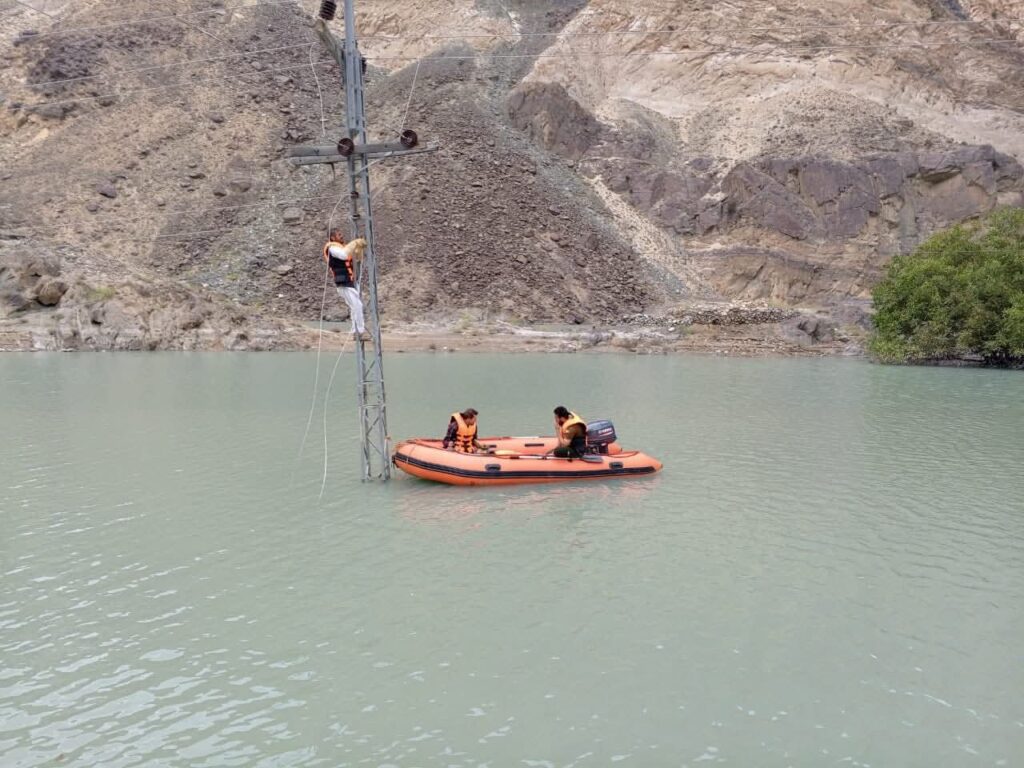
This photograph shows the effort to restore electricity after the Talidas flood. Destroyed power lines had left the valley in complete darkness. Local electricians and volunteers risked their lives to reconnect wires, using an inflatable boat to reach submerged poles. Their work was dangerous but essential for relief efforts and daily life. Their courage went beyond duty, showing how individuals acted when institutions could not. Restoring electricity meant more than light; it reconnected families, powered water systems, and revived hope. This moment reflects the spirit of recovery, where small acts became symbols of resilience and collective strength.
The Lake That Remains:Curse or Warning
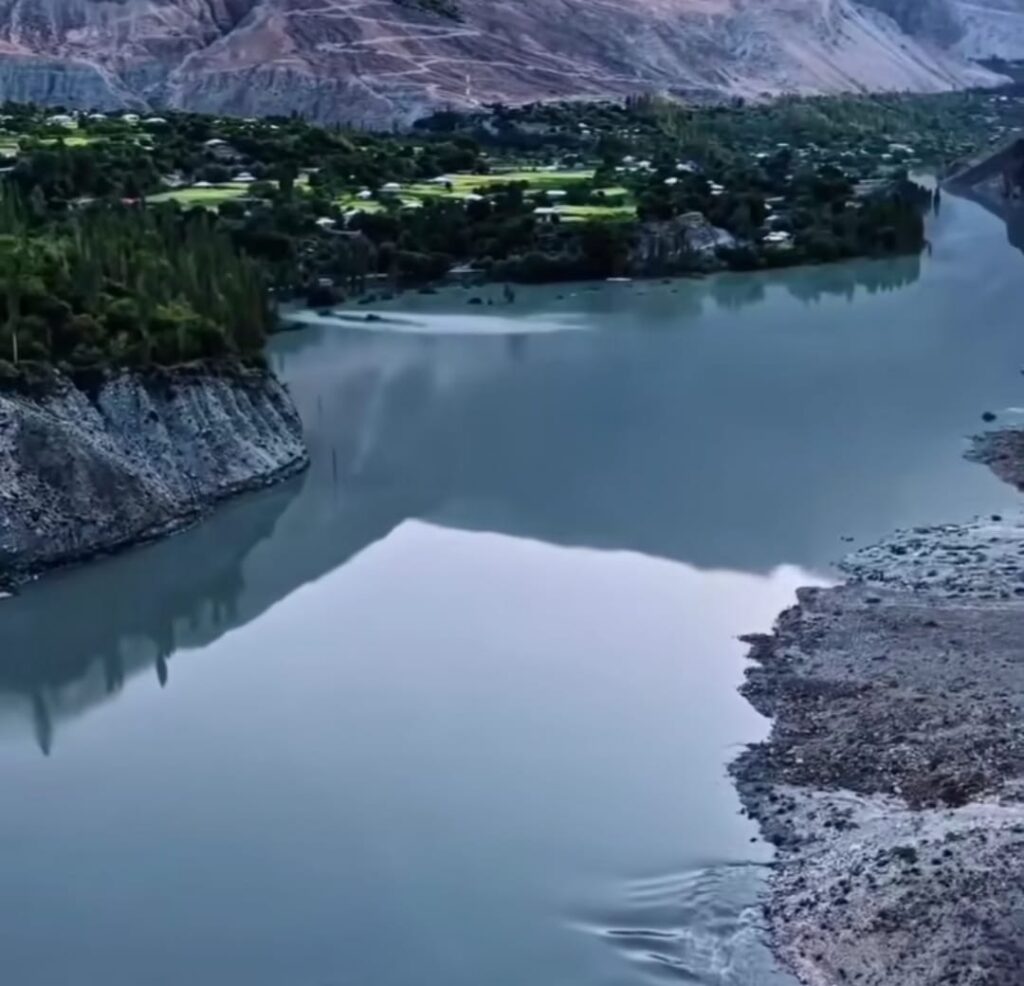
This photograph shows the lake that formed after the 2025 glacial outburst flood in Talidas. The same water that destroyed homes now lies calmly between the mountains, both beautiful and haunting. For locals, it is a reminder of loss and a warning of what may come again. Beneath its stillness lies the mark of climate change, melting glaciers and rising temperatures that continue to reshape Gilgit-Baltistan. Scientists report an increase in such lakes each year. This image calls for reflection and urgent action, reminding us that resilience alone is not enough without adaptation and environmental responsibility.
Image Source: Drone footage courtesy of a local resident, Talidas Valley (2025).